2025/26 City of Los Angeles Master Artist Project Grant
online exhibition
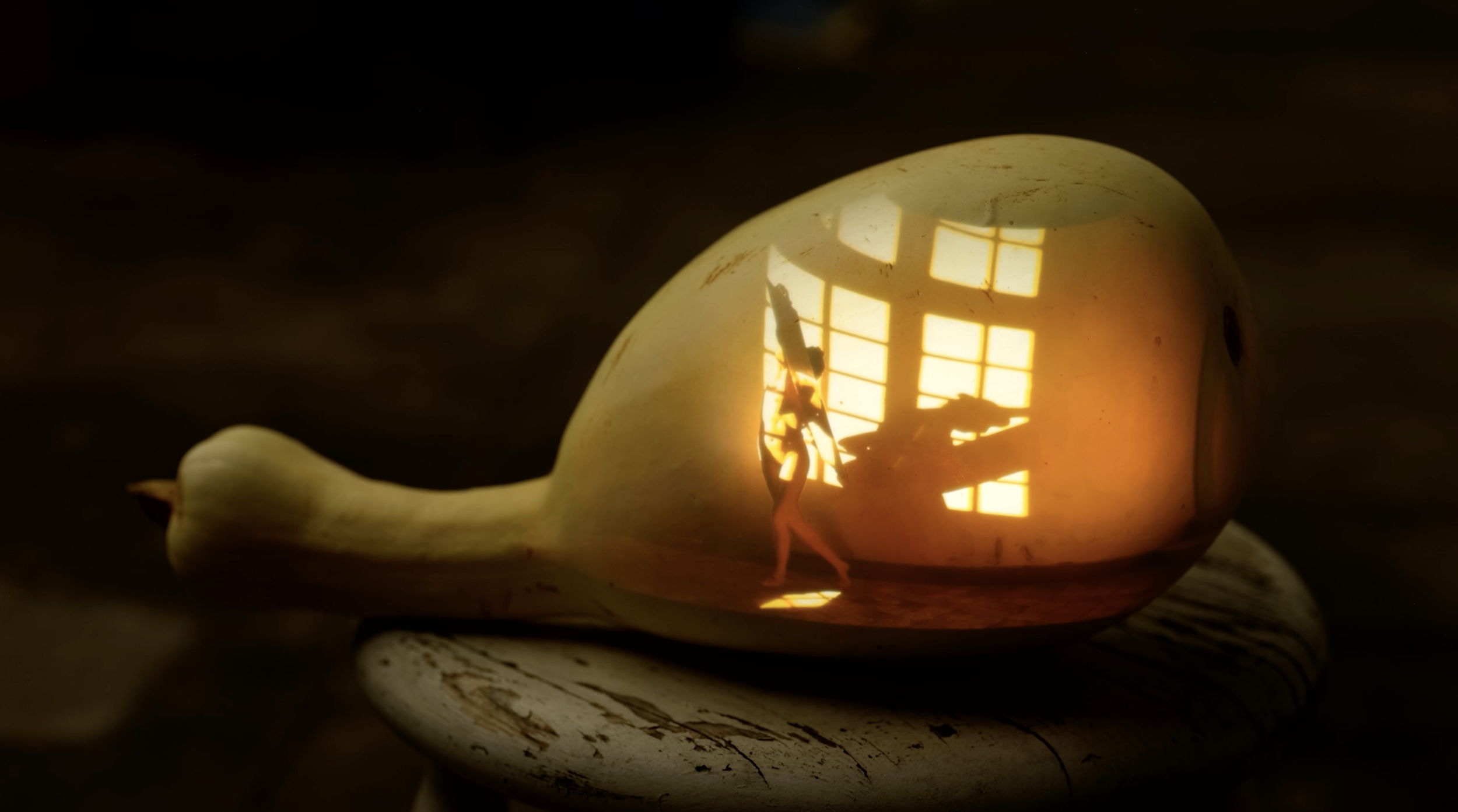
Sunrise session #2, excerpt (Maison Dora Maar), 2026, Digital video projection on squash with sound, TRT: 28:36, looped
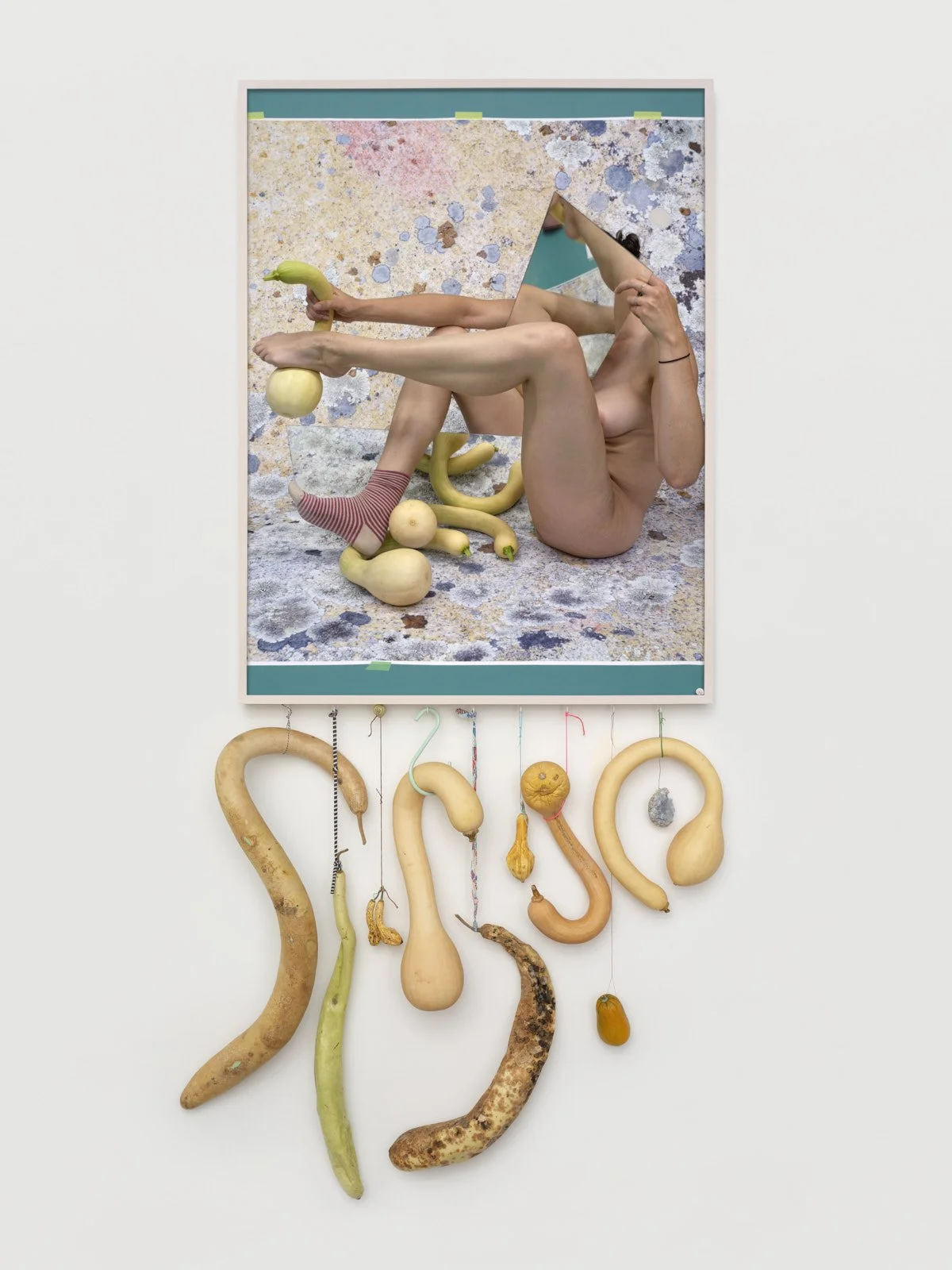
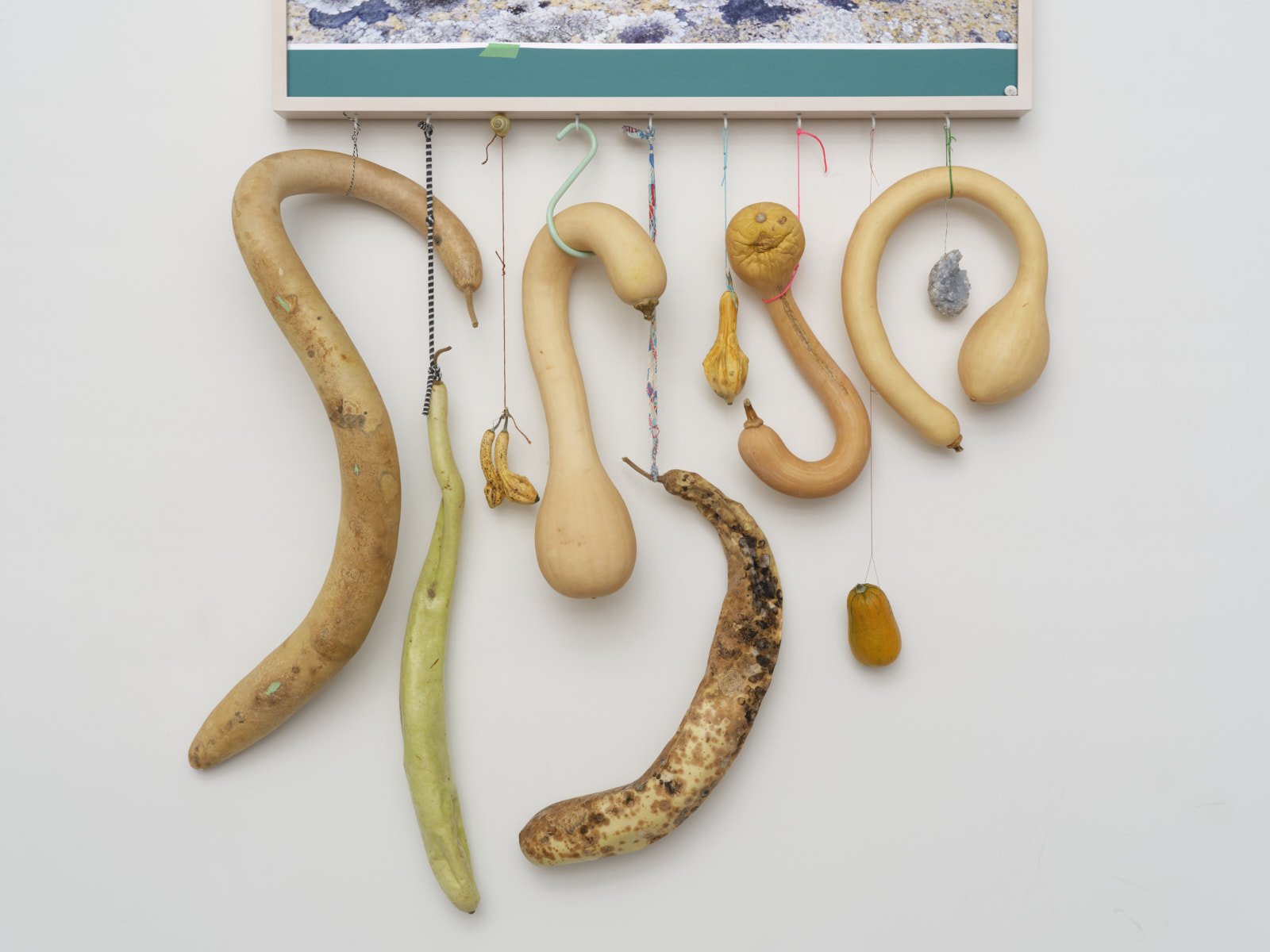
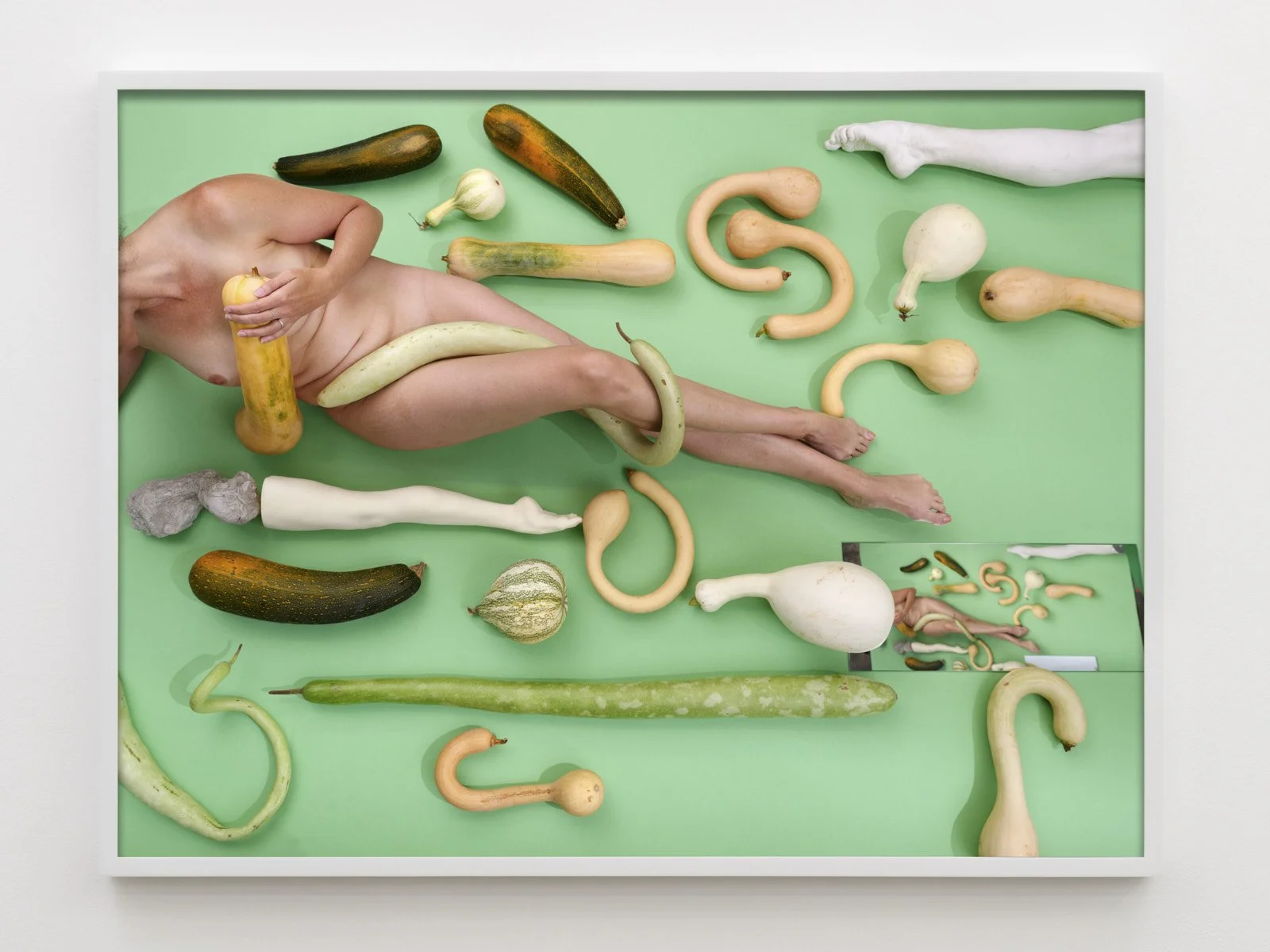
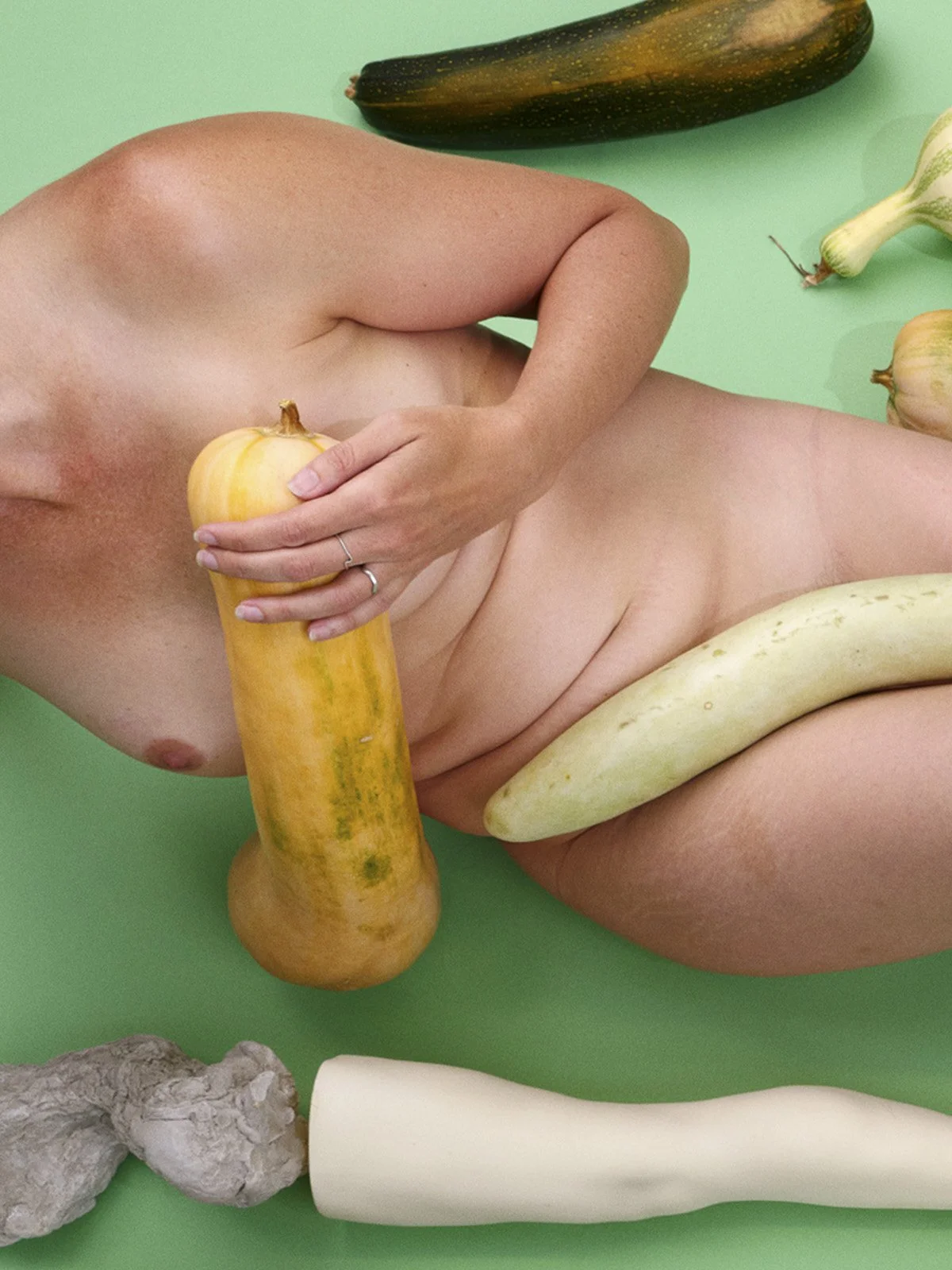
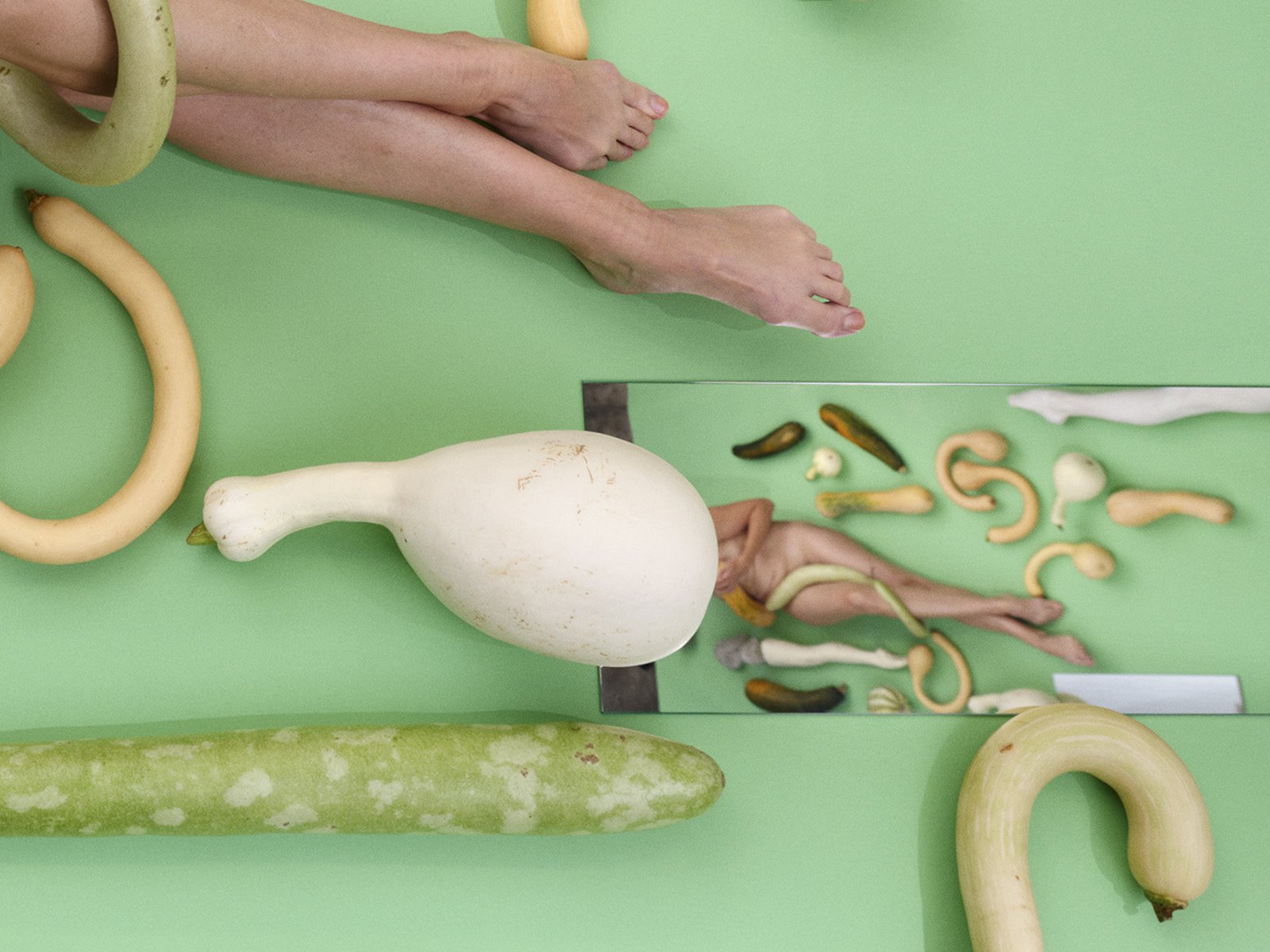
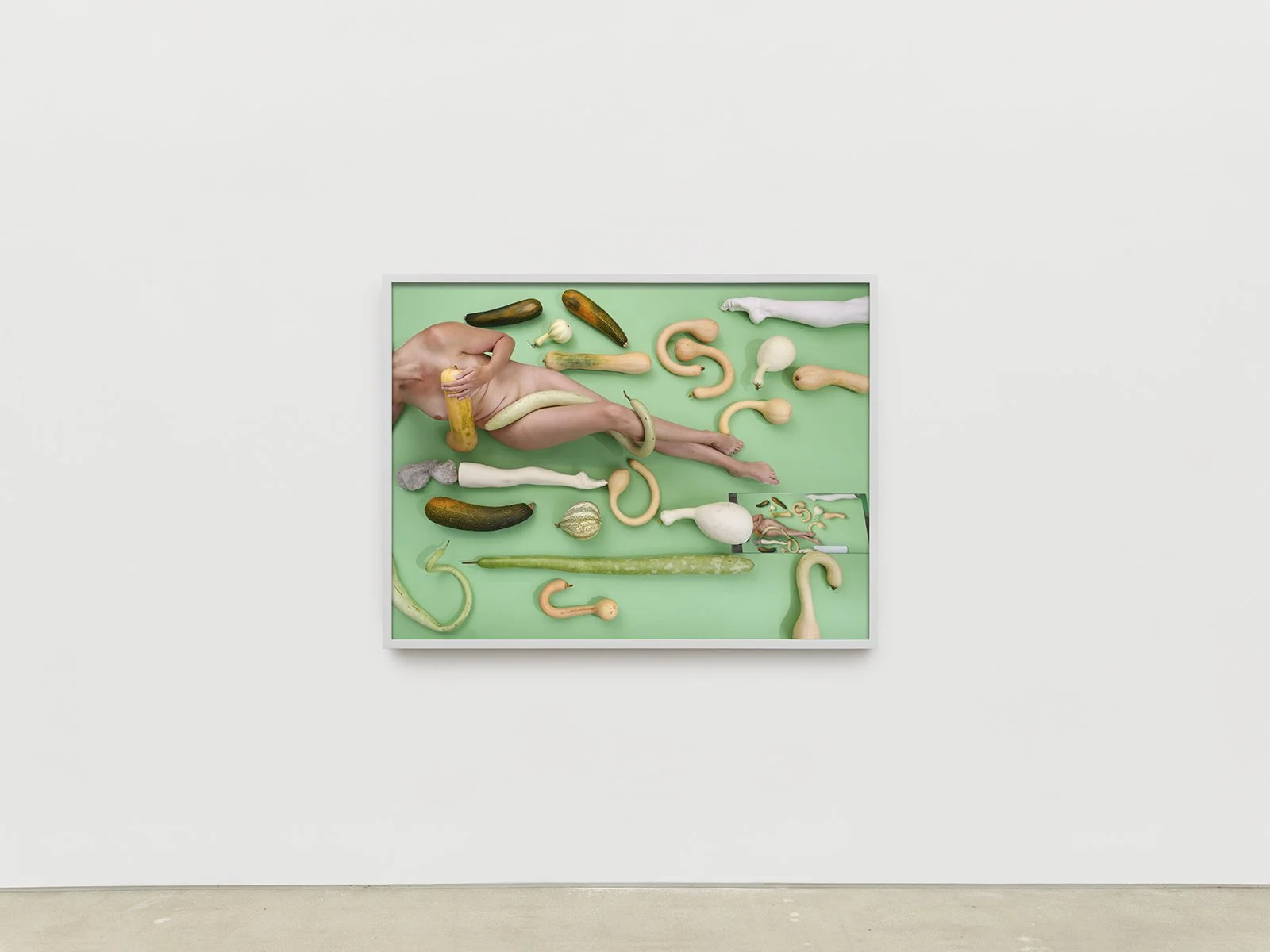
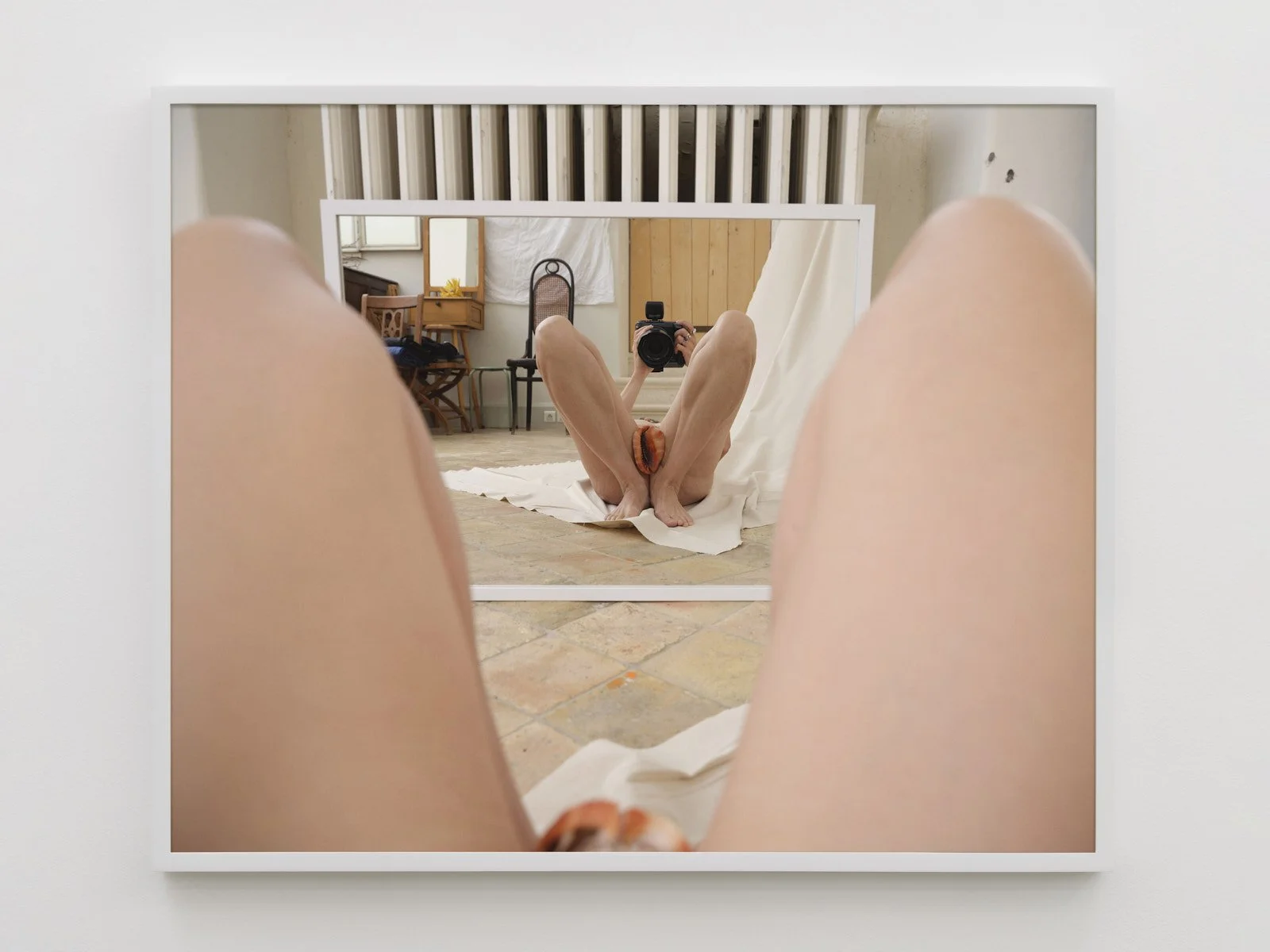
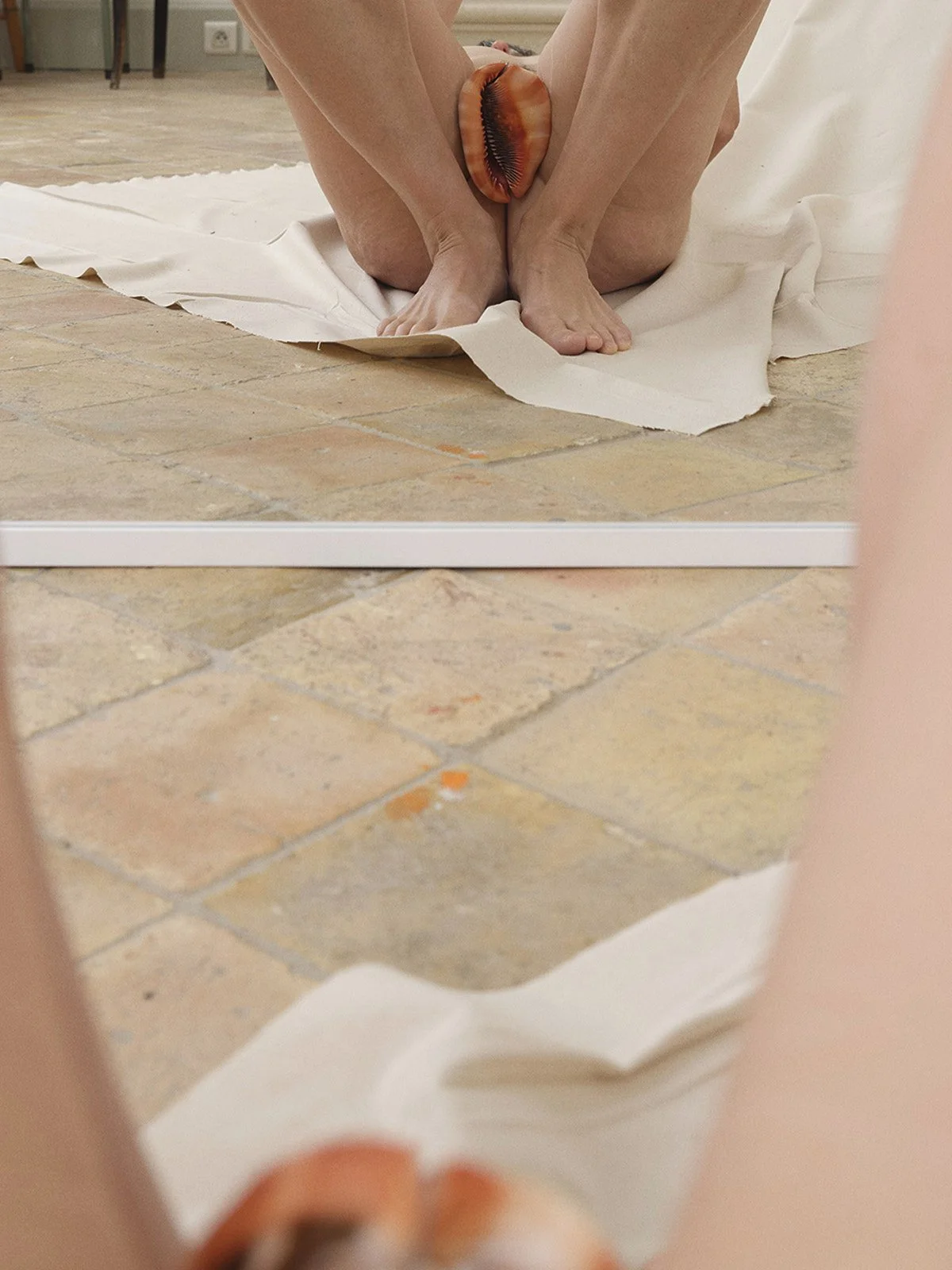
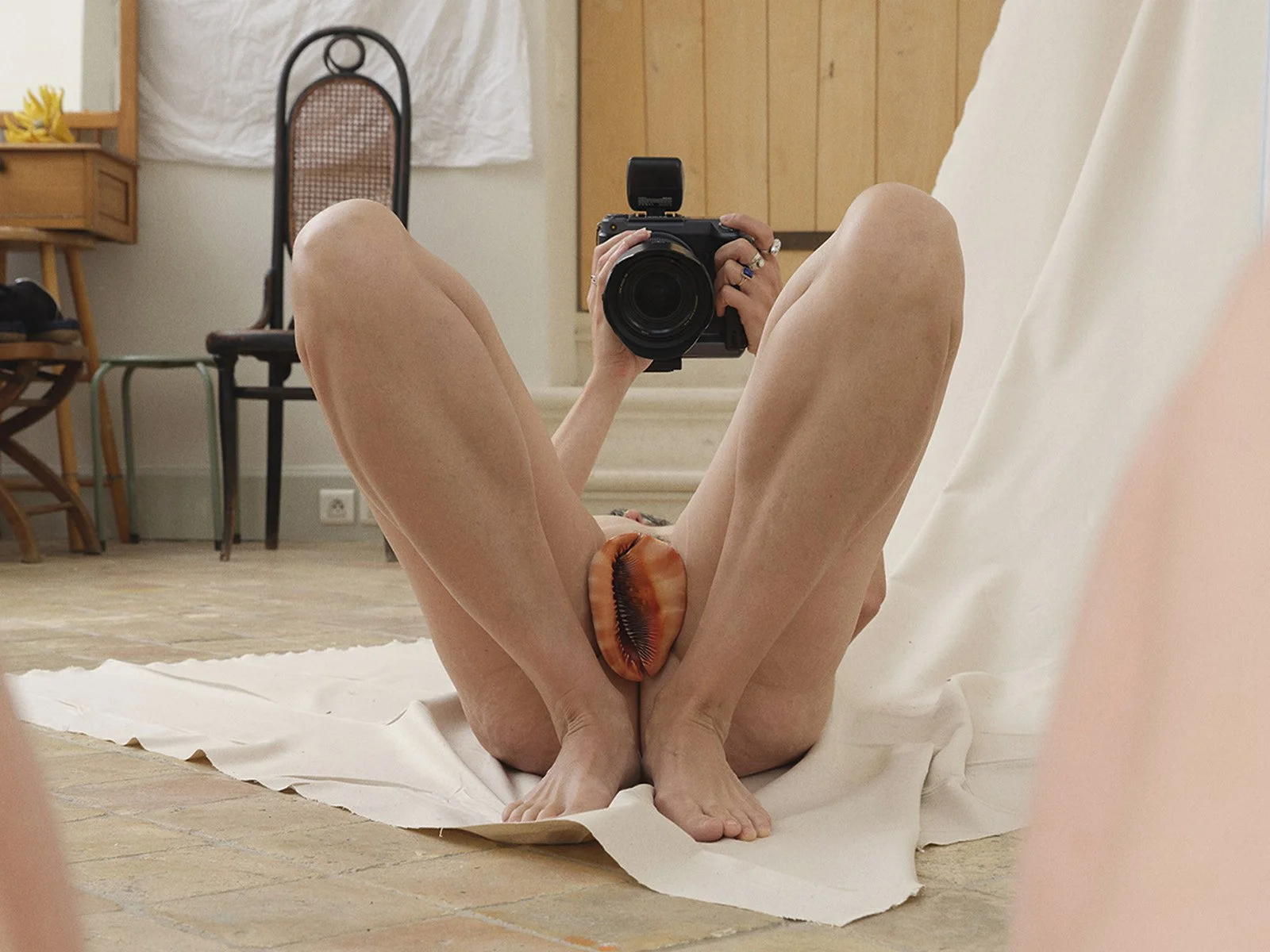
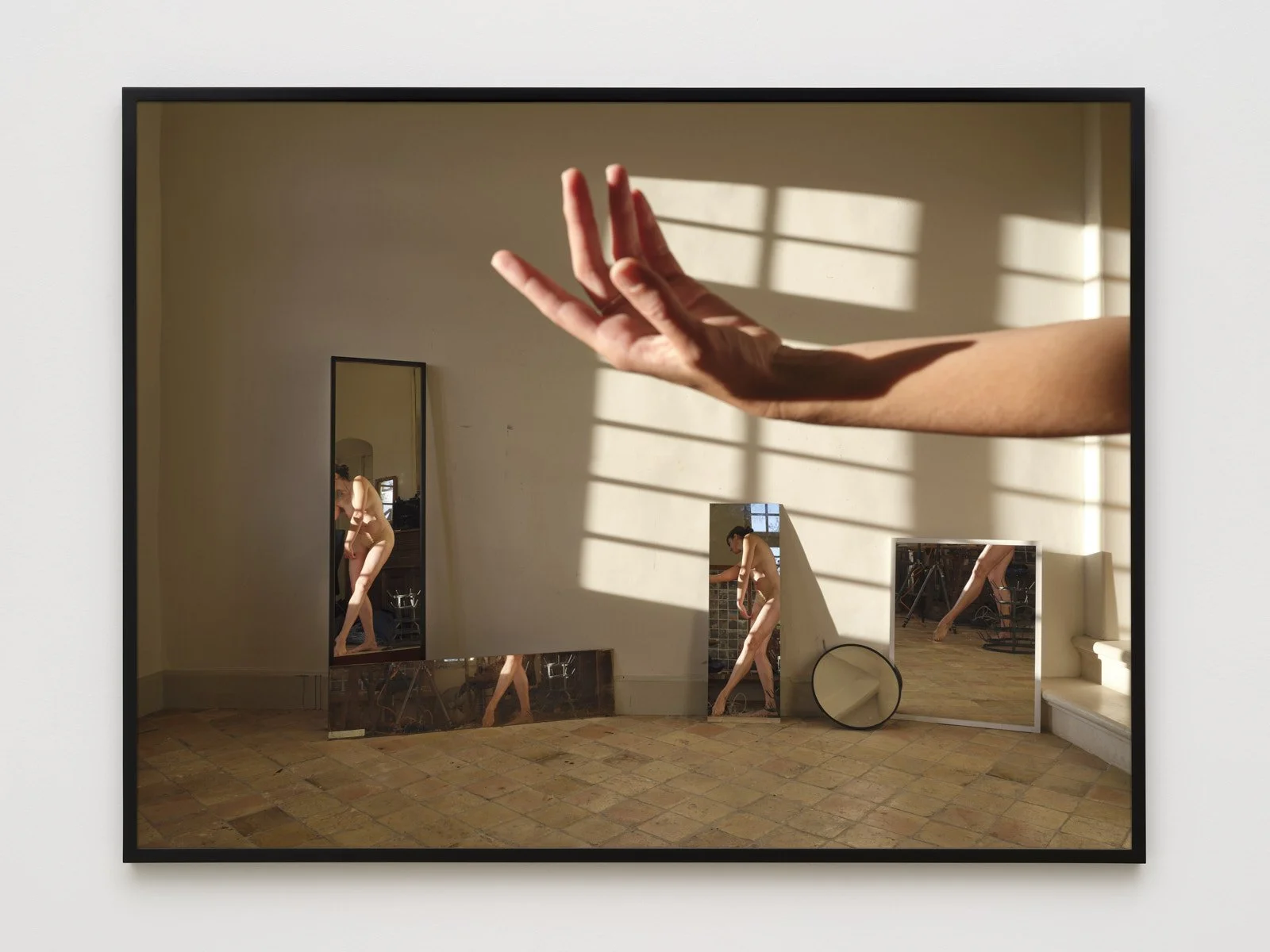
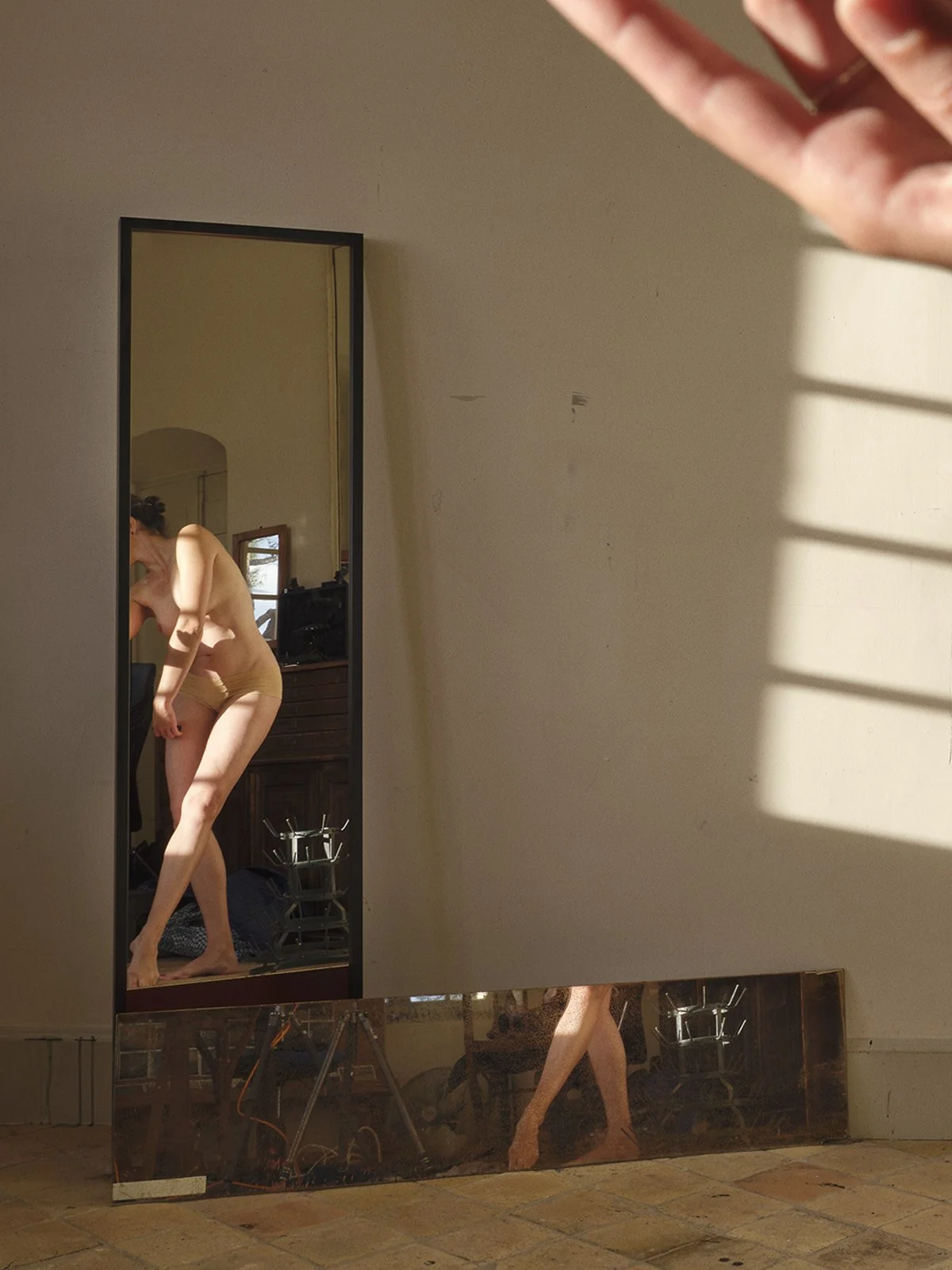
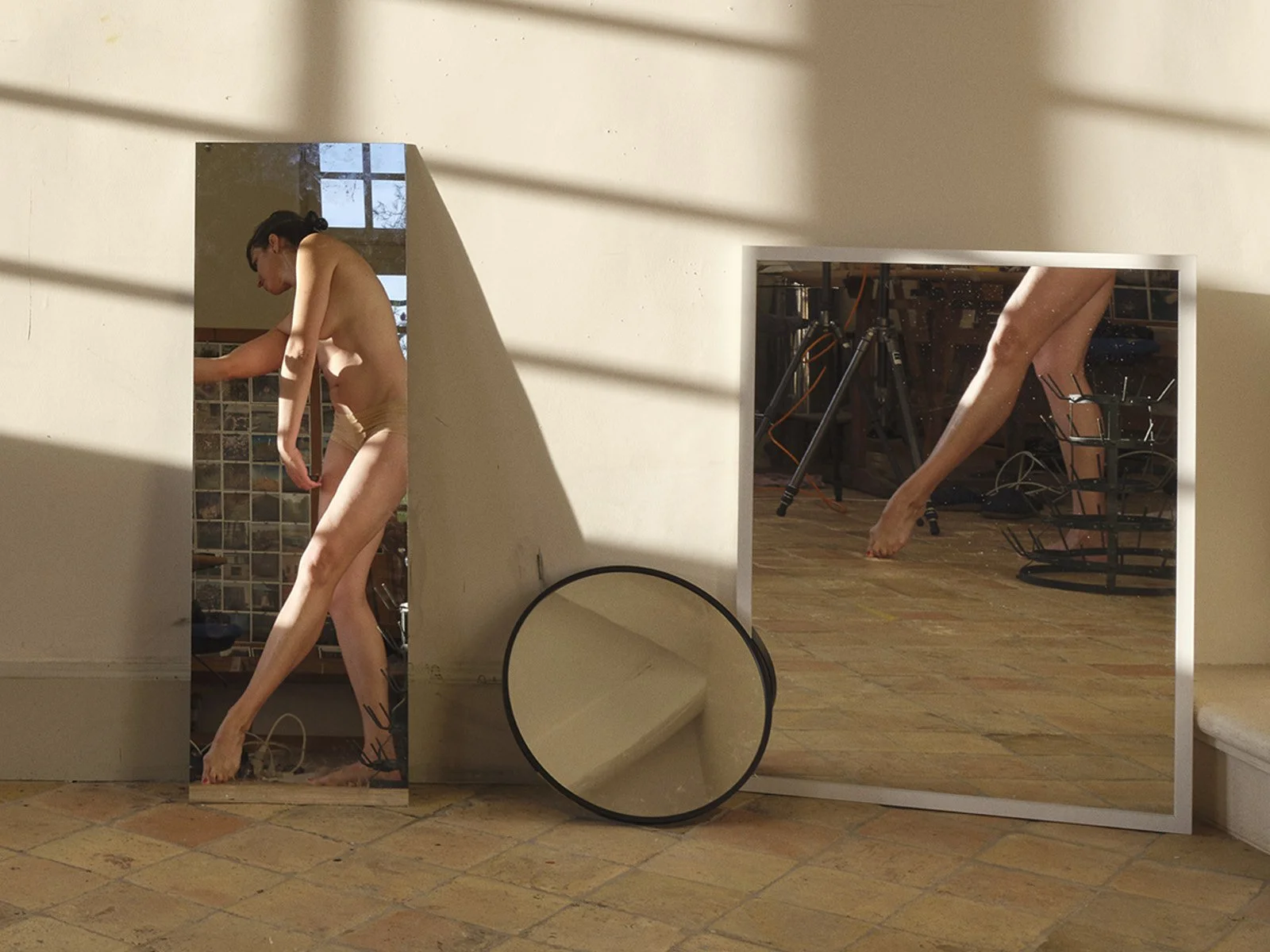
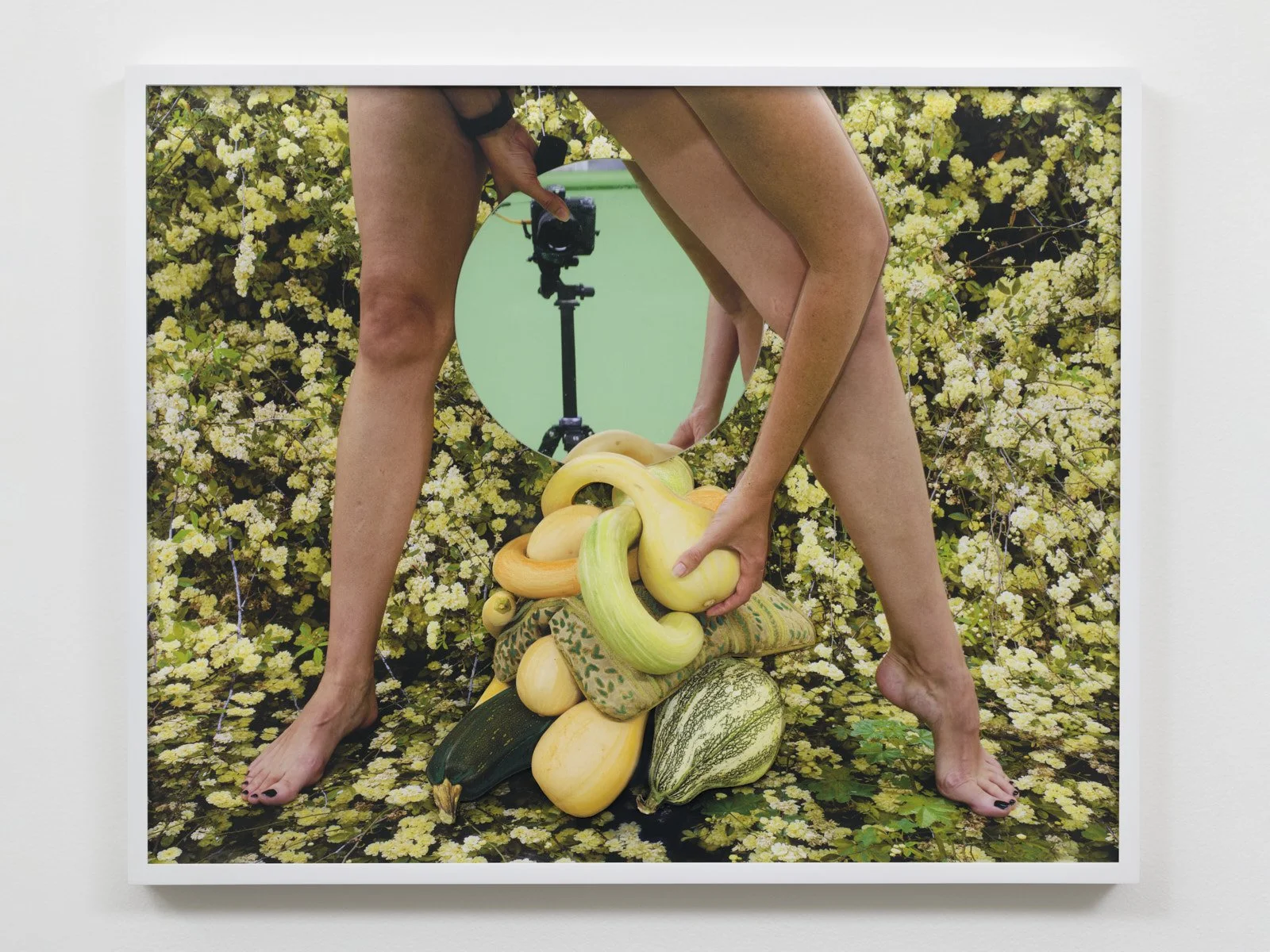
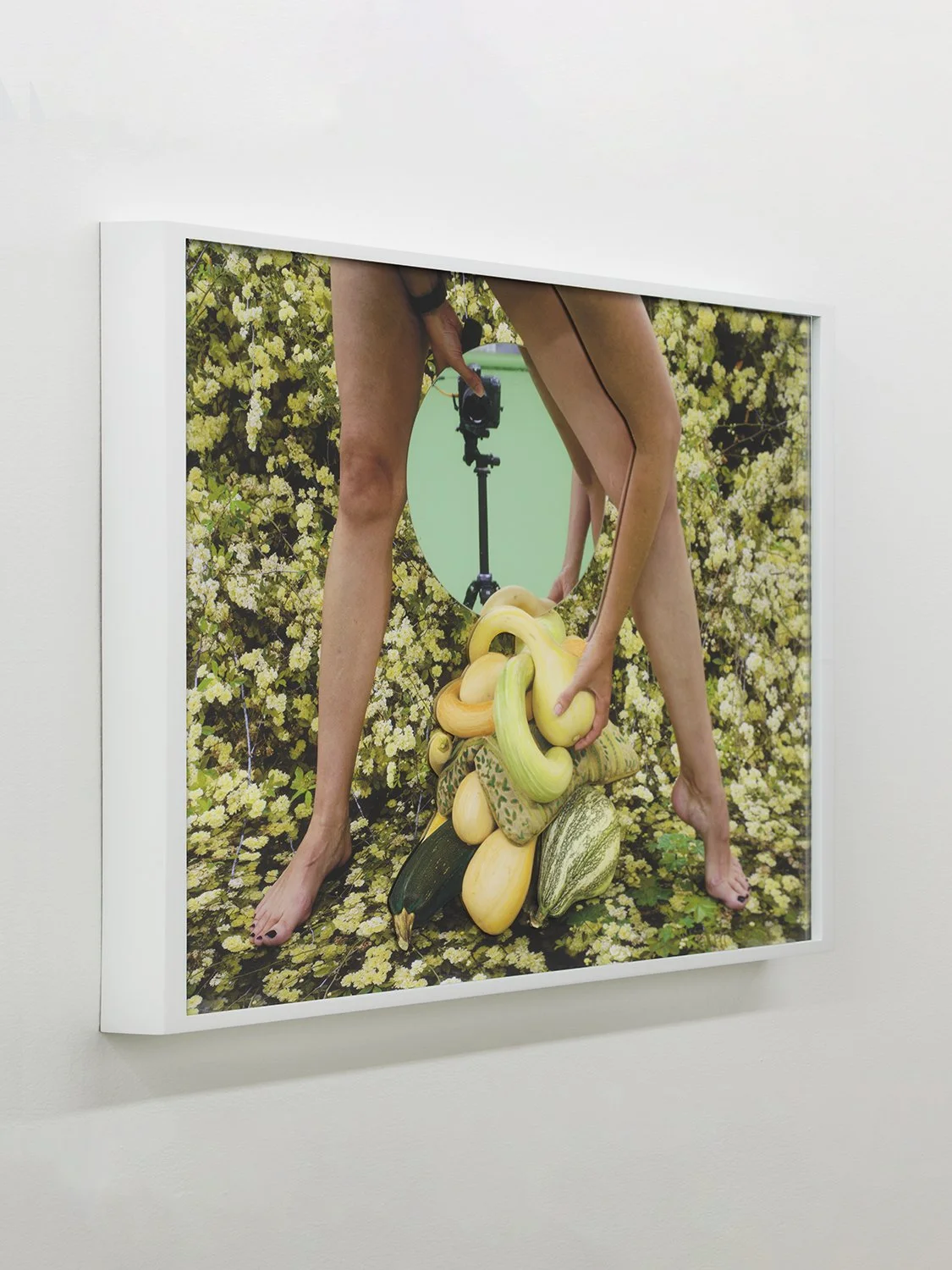
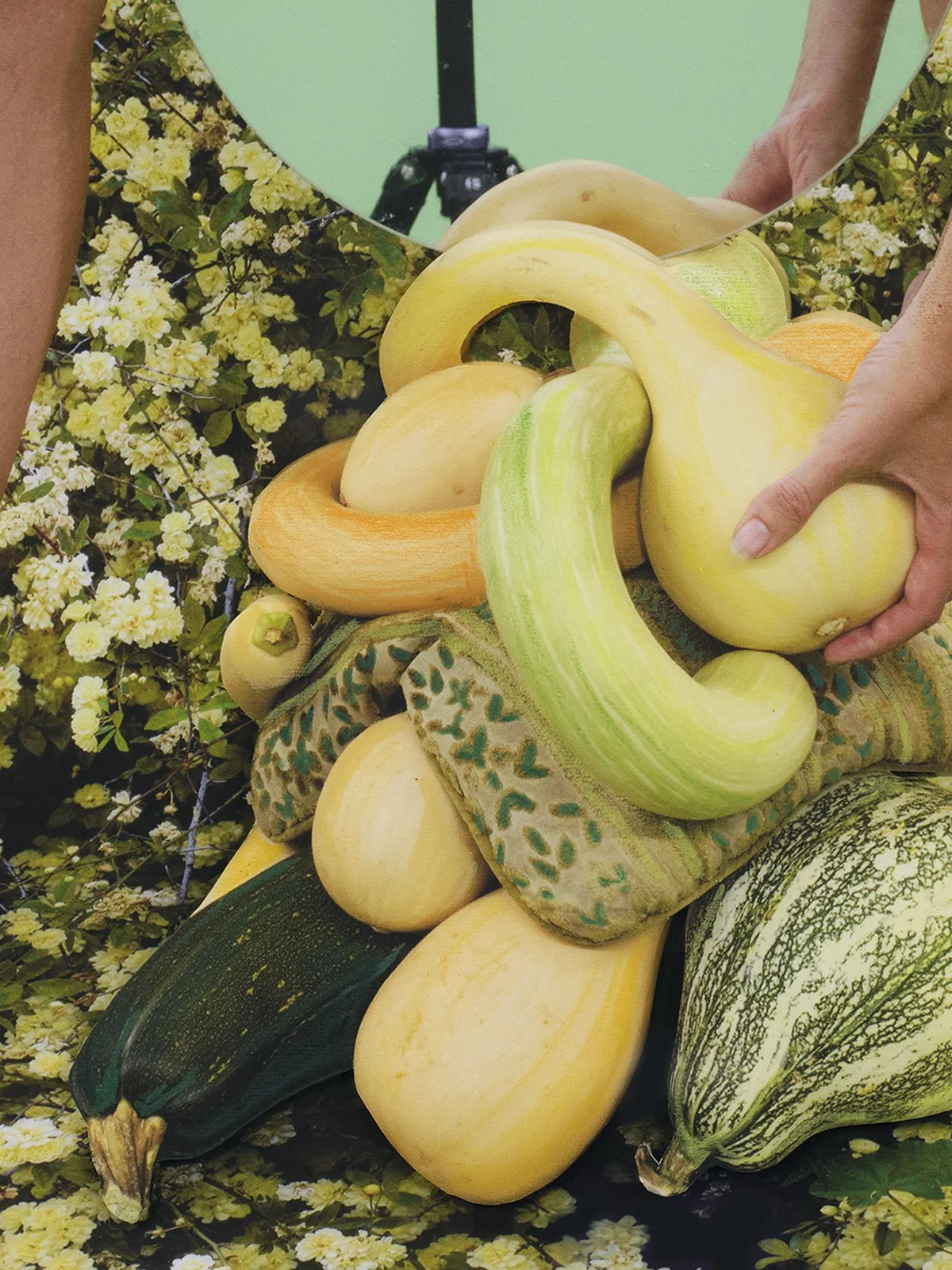
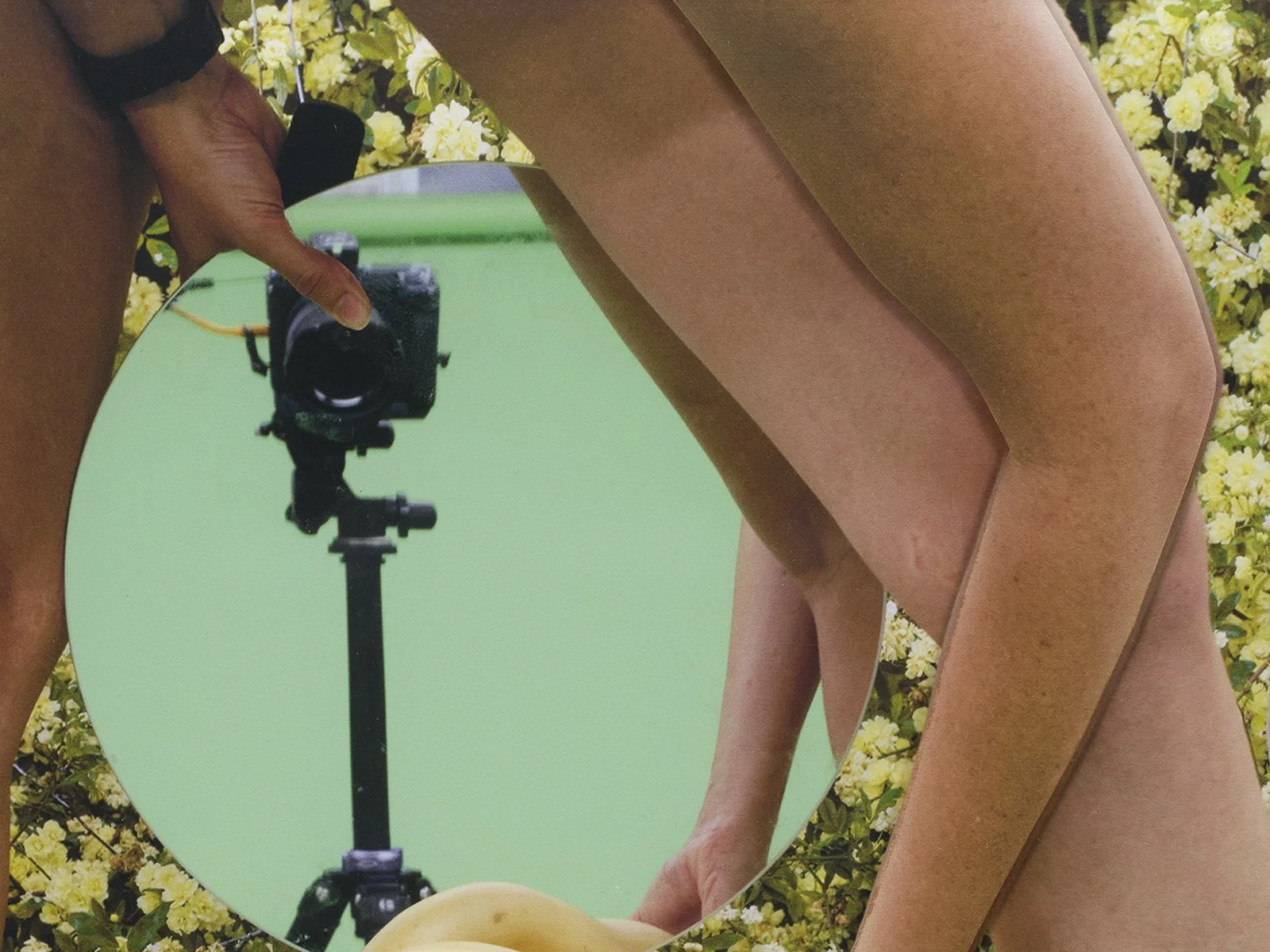
For at least the last twenty years, many of photography’s leading practitioners have interrogated the medium’s constructed nature, experimenting with every possible way to draw attention to an image’s facture. Fundamental to this endeavor is an attempt to foreground photography’s received forms and their disciplining effects. This acknowledgment of the conditions of production is also apparent in Heather Rasmussen’s output—the tripod, the camera, tape holding up backdrop paper are all frequently visible in her pictures—but the dry gust of rote critique that comes with the territory is notably missing. In its place is something more instinctual and phantasmagoric. Rasmussen’s still lifes, self-portraits, and sculptural assemblages, primarily shot in a controlled studio setting, offer cryptic juxtapositions: dipper gourds, snake gourds, giant zucchini; her own nude body, refracted in a mind-bending series of mirrors; cast replicas of her own legs and pointed feet, misshapen by the rigors of ballet; amethyst, snail shells, lichen.
If the post-conceptual turn in photography focuses almost entirely on interrogations of the medium’s structuring apparatus, Rasmussen opens her lens wider onto other disciplining forms, particularly those that leave their mark, psychically and physically, on the body: the depredations of stringent physical training on bone and sinew; the mirror as a critical, even violent reflector; the camera’s male-coded, invasive gaze. Many of Rasmussen’s photographs possess a studied perfection recalling that of Irving Penn or Paul Outerbridge—a certain lushness of color, a meticulous arrangement of shapes. But Rasmussen often punctures the artifice of her compositions with intentional irregularities: an elastic hair band or smartwatch left on a wrist; a striped sock on one foot, the other foot bare; smeary fingerprints on the surface of one of her signature mirrors. In some works, threat or decay looms, as in Photo Multigraph #1 (long mirror and socks on teal), 2021, a self-portrait in which three mirrors transform Rasmussen’s body into a quasi-arachnid array, bristling with limbs;or in Untitled (Sprouting zucchini with mirrored breast and camera), 2015, an exquisitely constructed still life–cum–self-portrait in which the rotting flesh of a collapsing sunstripe zucchini props up circular mirrors that reveal glimpses of the artist’s face and chest. Going the way of all flesh, animal or vegetable, remains an unmistakable theme.
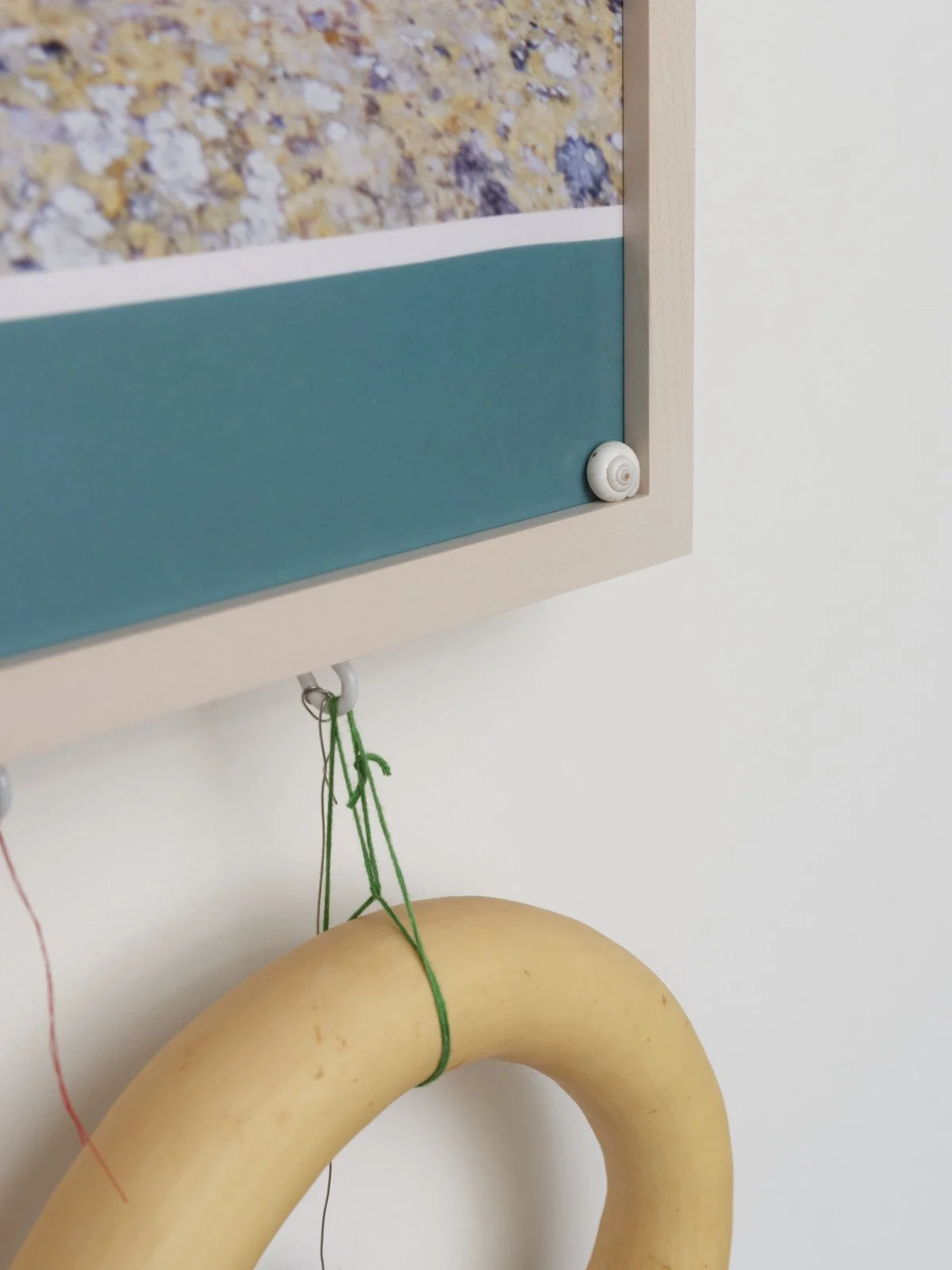
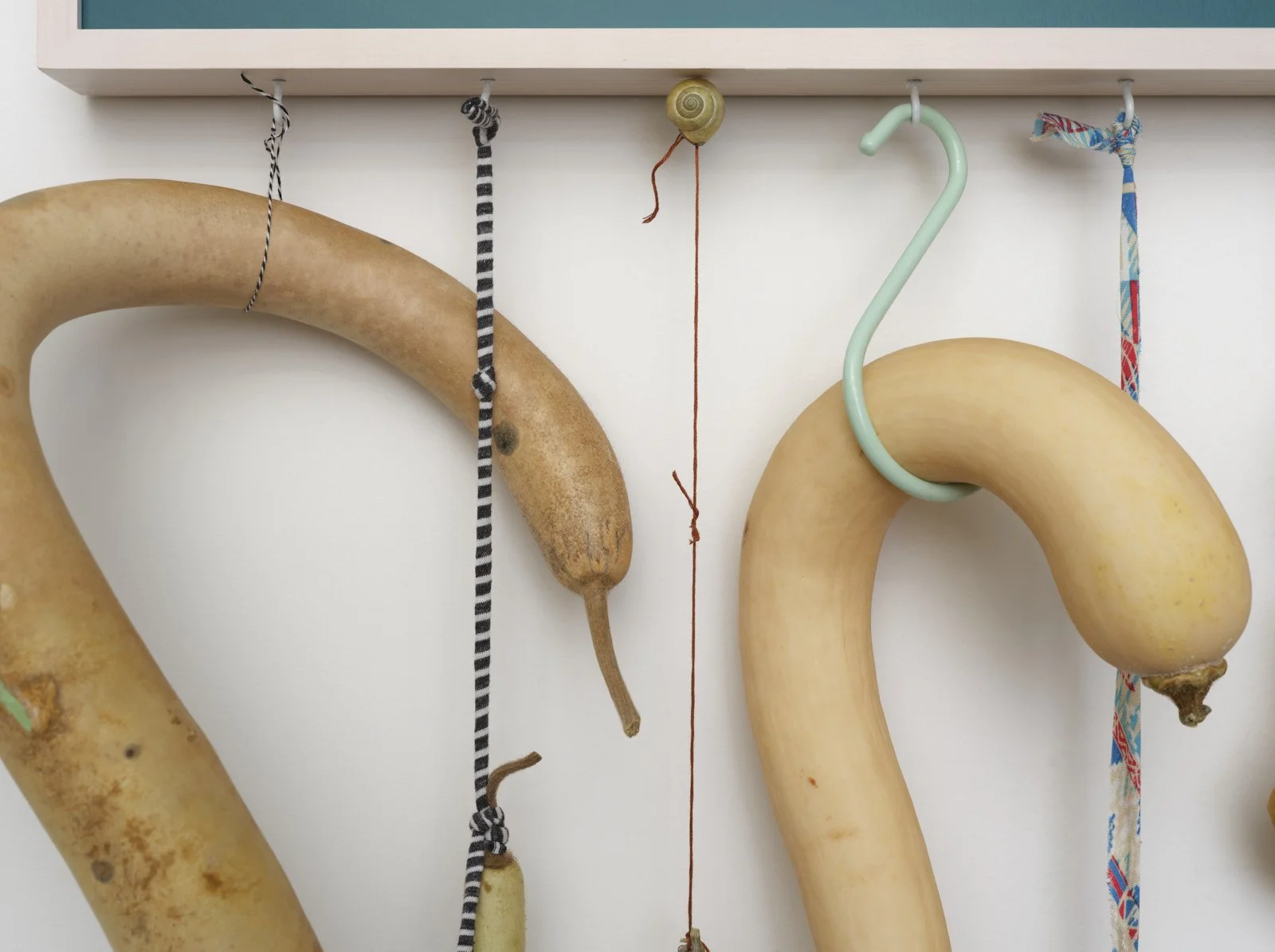
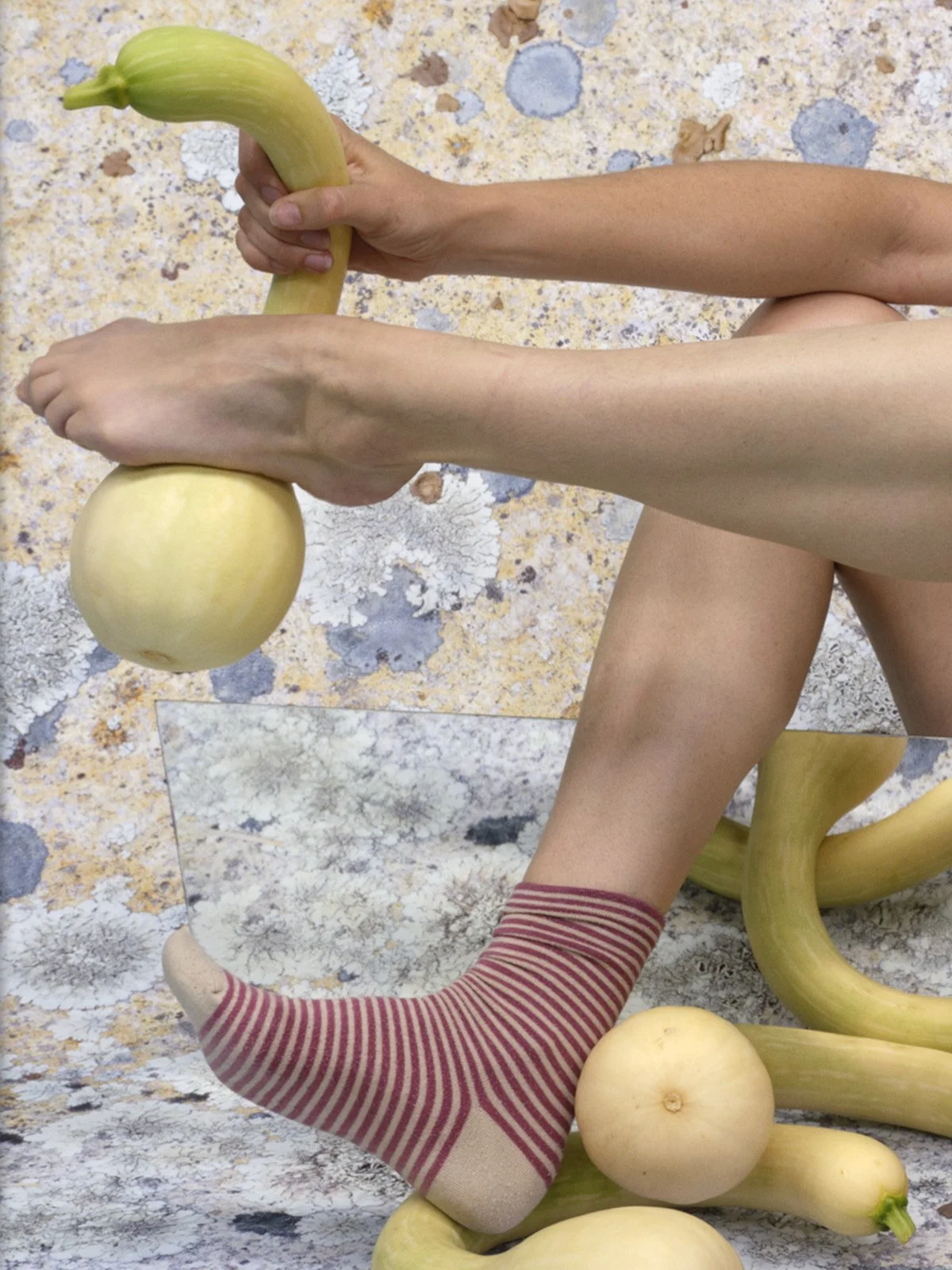
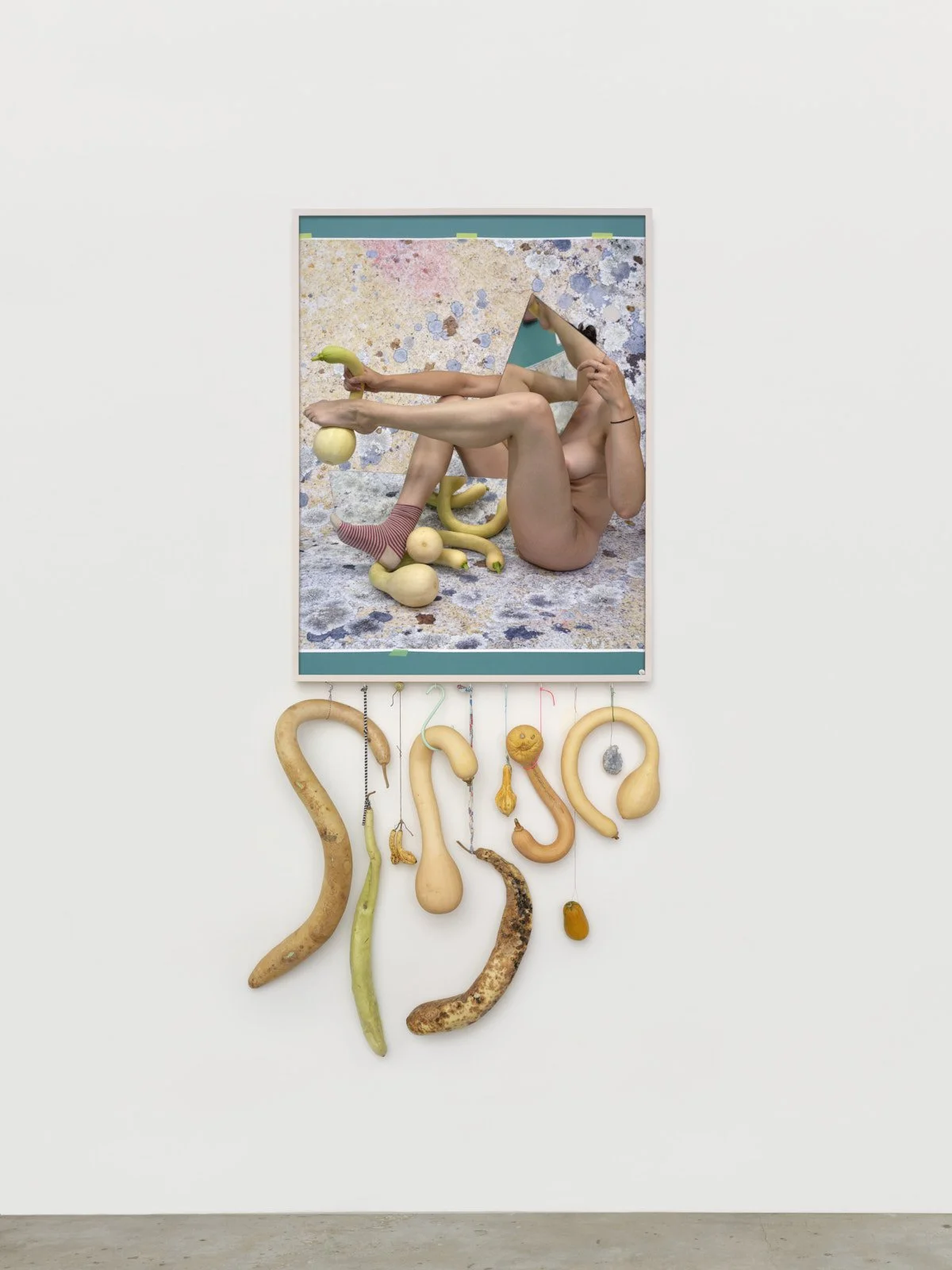
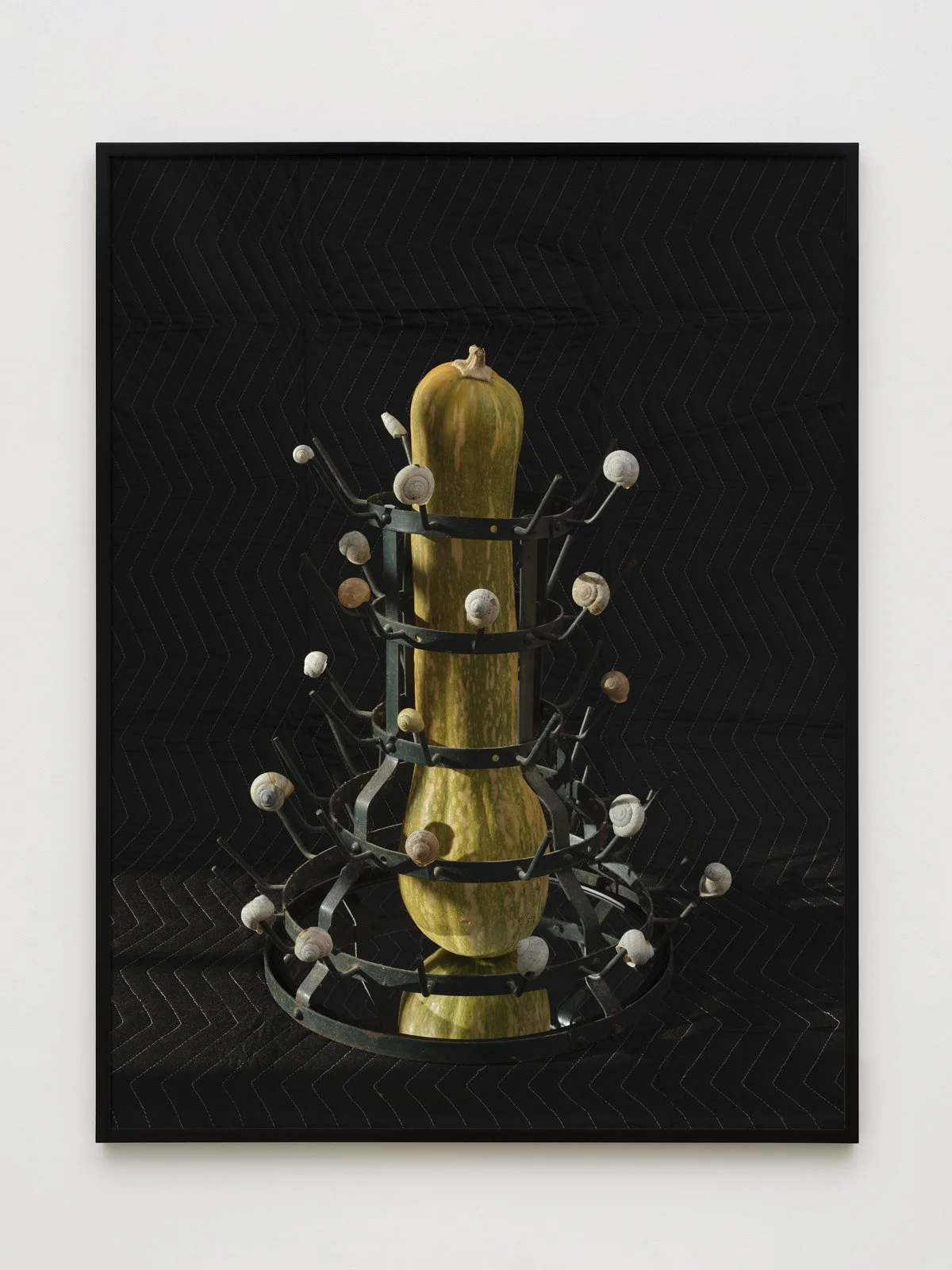
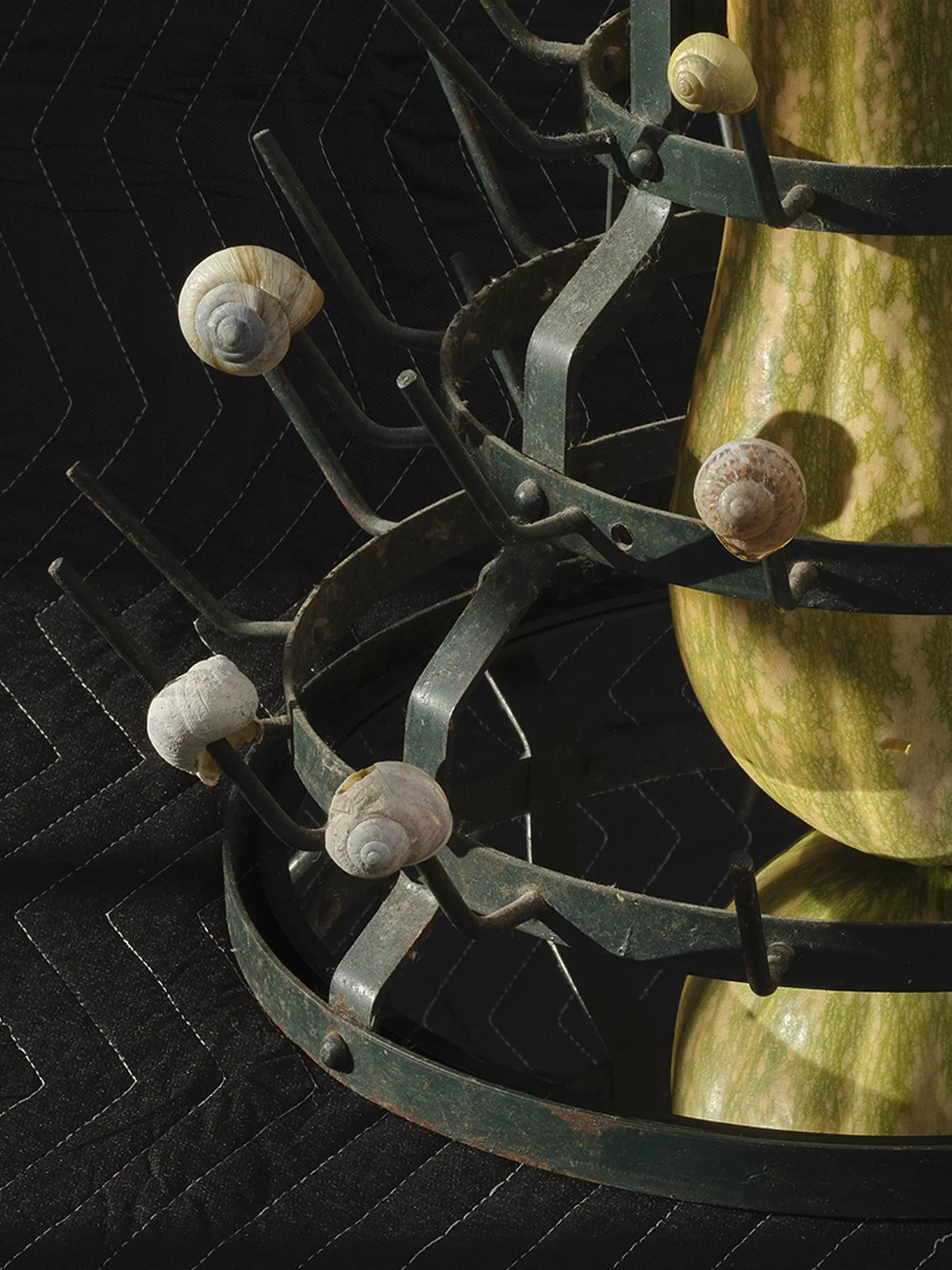
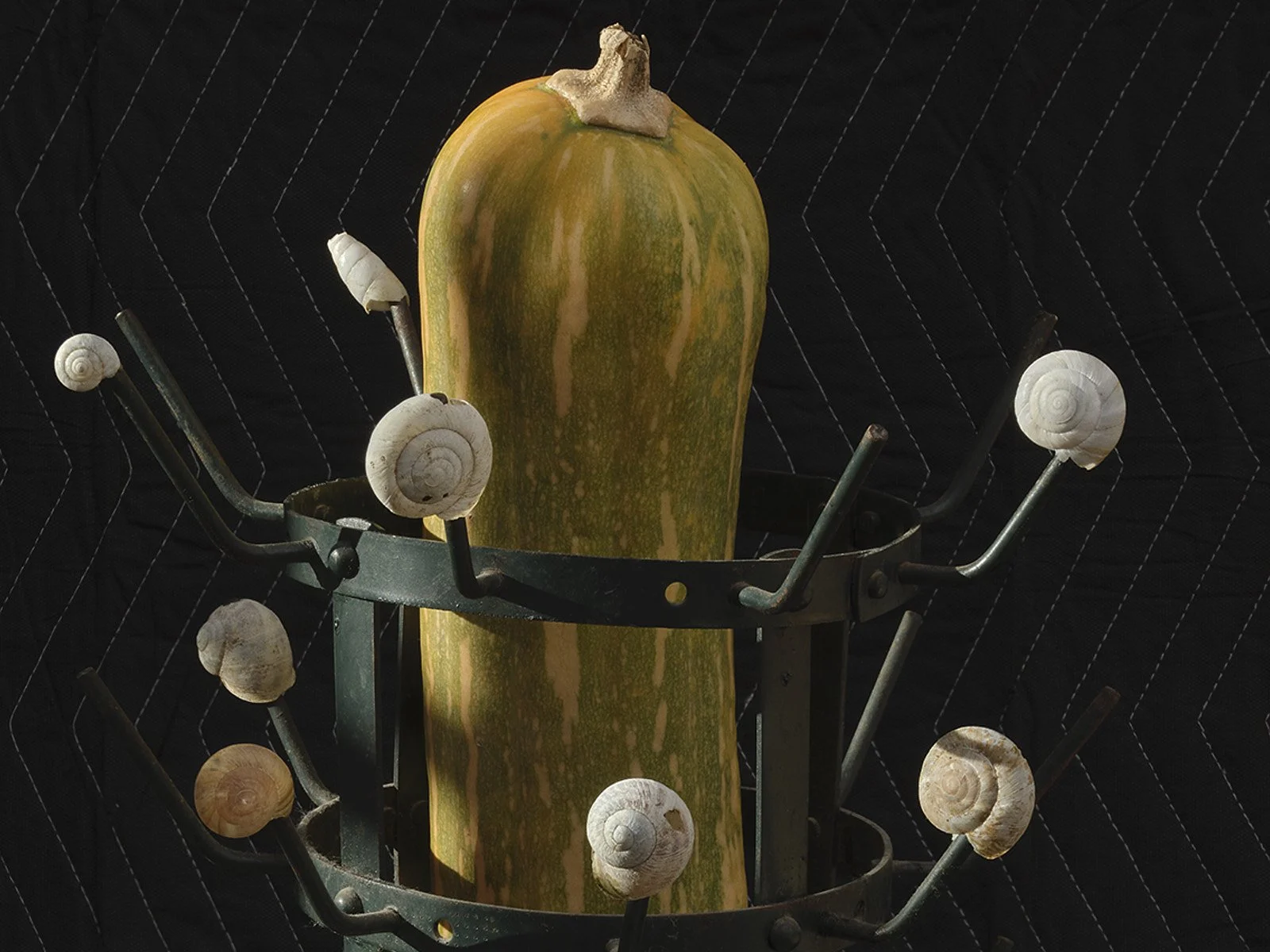
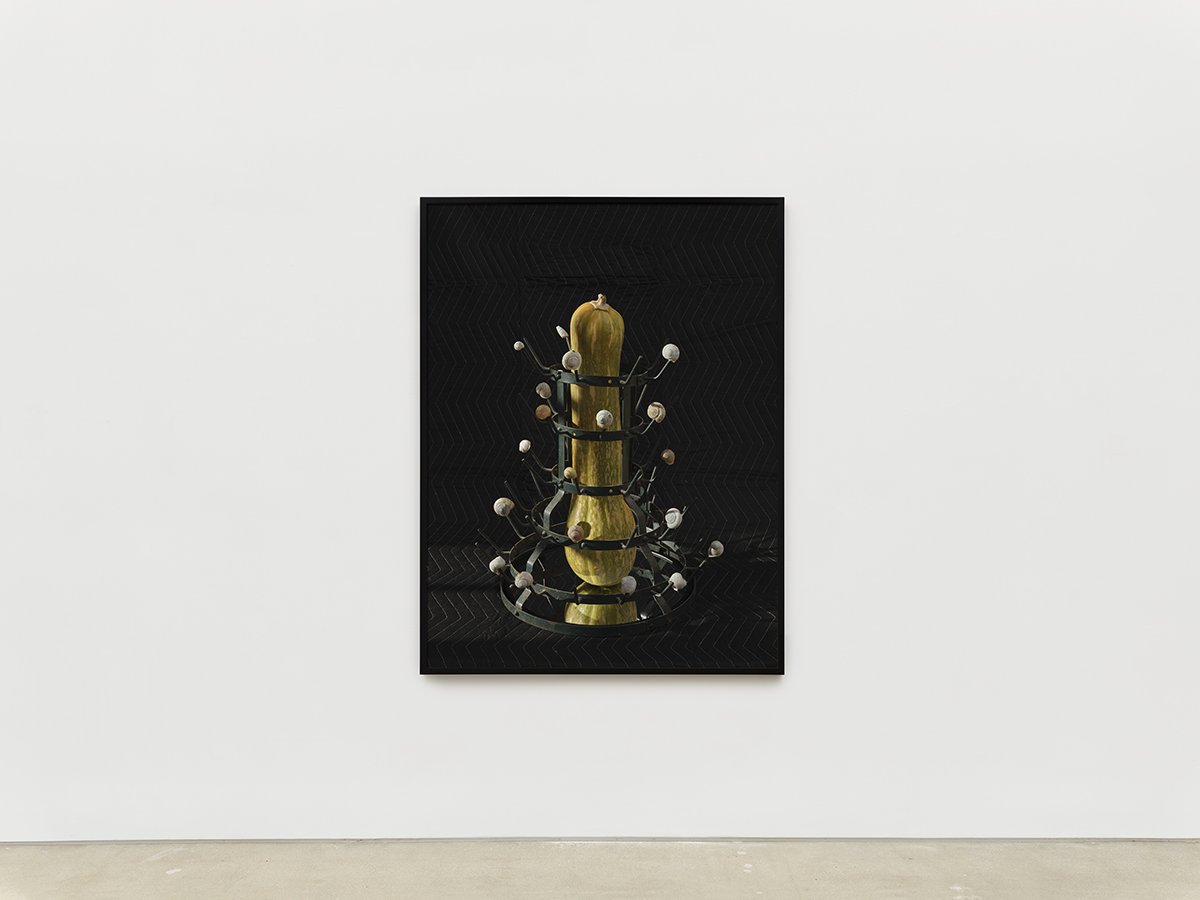
In Shells, squash and rack (After Duchamp), 2025, a metal bottle stand—indistinguishable in design from the one made famous by the titular conceptualist in a readymade from 1914—contains within its pronged vertical cage an enormous squash, which stands erect and protrudes through the top of the enclosure. Surrounding this priapic totem are a dozen or so empty snail shells, hanging from the rack’s spikes. Duchamp’s own Bottle Rack has often been read by critics in a Freudian manner, thanks to its protuberant phallic spikes; in her image, Rasmussen complicates this gendered art-historical object by topping the spikes with the shells of snails—creatures exuding intimate secretions. (Freud himself was once rendered in a portrait by Dalí, who had met the Viennese doctor and exclaimed that his “cranium [was] a snail”; Dalí analogized the snail’s hard shell as the conscious mind, the soft flesh within as the unconscious.) It’s a photograph that prickles with innuendo and humor, a mash-up of nature and culture with a heavy whiff of death. The snail shells, after all, are mere remnants of living creatures.
Rasmussen’s sets of signifiers almost always confound in this manner, as if plucked from the swirling unconscious. Perhaps that’s why the recursions of Magritte’s mise-en-abyme paintings and the biomorphic forms of Tanguy haunt her work more readily than the Marxist concerns of Christopher Williams or the commercial send-ups of Roe Ethridge. An index of Rasmussen’s frequent subjects reads like a hothouse fever dream, and is no less inscrutable. In her pictures, is a curvilinear gourd a phallus, a stand-in for a limb, or a symbol of the fecundity of the natural world? Do her mirrored planes depict a sinister architecture of entrapment or offer a subtle commentary on female aesthetic enforcement? For Rasmussen, the photography studio provides a stage for affective charge to be pinned down—squirming, indeterminate—on a sheet of seamless paper.
Essay by Claire Lehmann

This group of works could not have been possible without the generous help and support of many people. The City of Los Angeles Department of Cultural Affairs staff and curators, Web Designer & Developer: Ella Rosenblatt, Catalog Designers: Louise Sandhaus, LSD (Louise Sandhaus Design), and Kat Catmur Catalog Editor: Elizabeth Pulsinelli, Content Managers: Juan Garcia and Ben Espinosa and Photographer & Videographer for Website: Jason Travis. Thank you also to Claire Lehmann, artist and writer, who wrote this fabulous essay about my work.
I also want to thank The Dora Maar Cultural Center for giving me the opportunity to spend a month in Dora Maar’s house in Menerbes, France in 2025, where the ability to work continuous days in the studio was revelatory to my practice and fed my soul as an artist, mother, and human. Thank you Gwen Strauss, director, Frauke Josenhauns, curator, and staff Opheile, Cami, Celine and Laurence. To the Nancy B. Negley Foundation for creating and funding this residency and lastly to my fellow residents, MK Foster and Sarah Viren, who were both inspiring, positive and wonderful beings - I couldn’t have asked for a better cohort.